Skip to content

Data Recovery FAST  /  SECURE  /  CONFIDENTIAL GET STARTED TODAY CREATE TICKET PRINT
SHIPPING LABEL
WE RECOVER
YOUR DATA

100% confidential - AES Encrypted Free Pre-Paid Shipping Label No Data, No Charge Inexpensive - 40% - 60% Less Than The Compeition Flat Rate Pricing - No Hidden Fees 98% Success Rate Secure Online Payments through PayPal File Verification - Validate Before You Pay

Monolithic Flash Data Recovery

Monolithic flash devices are the hardest media to recover data from — and one of our core specialties. When a monolithic USB flash drive, SD card, or MicroSD card fails, the controller and NAND memory are fused into a single chip with no removable components and no standard pinout. Most data recovery companies either turn these cases away or don’t have the tooling to attempt them.

We’ve been recovering data from monolithic devices since 2011 and have developed proprietary pinouts, tooling, and reconstruction techniques that allow us to extract data from hundreds of monolithic chip variants. If your device is monolithic and it’s failed, we can almost certainly help.

Which Devices Are Monolithic?

Monolithic designs are increasingly common and can be difficult to identify from the outside. Many customers don’t know their device is monolithic until a recovery is attempted. Here’s a general guide:
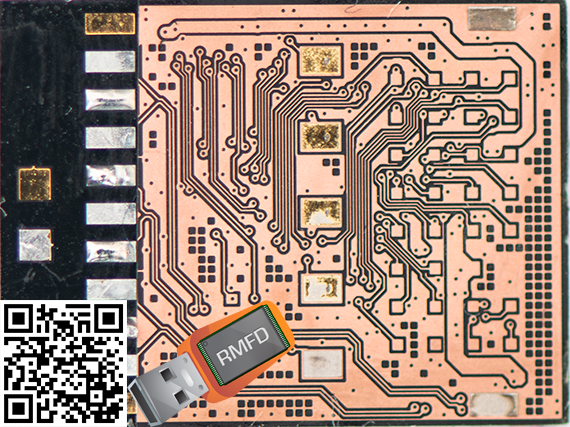
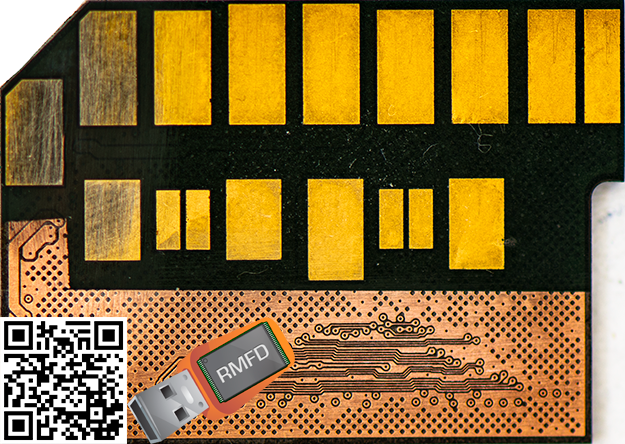
Which Devices Are Monolithic?

Almost always monolithic:

  • All MicroSD cards — regardless of brand or capacity
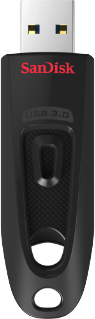
  • SanDisk SD cards (most models, especially newer ones)
  • PNY flash drives (most newer models)
  • Kingston DataTraveler flash drives (thin/compact models)
  • Any unusually small or thin USB flash drive

Sometimes monolithic:

  • Lexar flash drives (varies by model and production run)
  • Transcend flash drives (USB 3.0 models)
  • Samsung flash drives
  • Generic or no-name USB drives from Amazon and eBay

Usually NOT monolithic:

Not sure if your device is monolithic? Check our guide on how to tell if you have a monolithic flash drive, or just submit a case and we’ll identify it for you at no cost.

Our Advantage

  • Recovering monolithic devices since 2011
  • Proprietary pinout database with hundreds of chip variants
  • In-house developed extraction and reconstruction tools
  • We routinely recover devices other companies turn away
  • 98% success rate on traditional flash; high success on monolithic
  • No data, no charge guarantee

Service Details

  • Turnaround: 1-2 weeks typical for monolithic cases
  • Pricing: Quoted per case based on complexity
  • Free inbound shipping (USA)
  • No diagnostic or parts fees
  • File list verification before you pay
  • AES-256 encrypted workspace
  • Secure online PayPal payments

What Is a Monolithic Flash Device?

Traditional flash drives and memory cards are built from separate components — a NAND memory chip, a controller chip, passive components, and a connector — all mounted on a small circuit board. When the device fails, a technician can desolder the NAND chip, read it on a flash reader, and reconstruct the data.

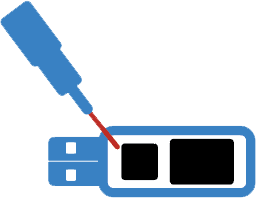
Monolithic devices are fundamentally different. The controller, NAND memory, and interface circuitry are all fabricated onto a single silicon die, then encased in a ceramic or plastic package. There are no removable chips, no accessible solder joints, and no published pinouts. The only way to access the raw memory is to carefully remove the protective coating and make direct contact with the chip’s internal bond pads — microscopic wire traces that vary from one chip design to the next.

This makes monolithic recovery one of the most technically demanding forms of data recovery in the world. Every chip variant requires its own reverse-engineered pinout, and the margin for error is razor-thin.
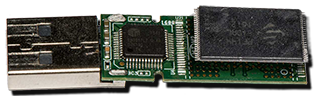
Traditional flash drive (top) — separate NAND chip and controller on a circuit board. The memory chip can be removed and read independently.

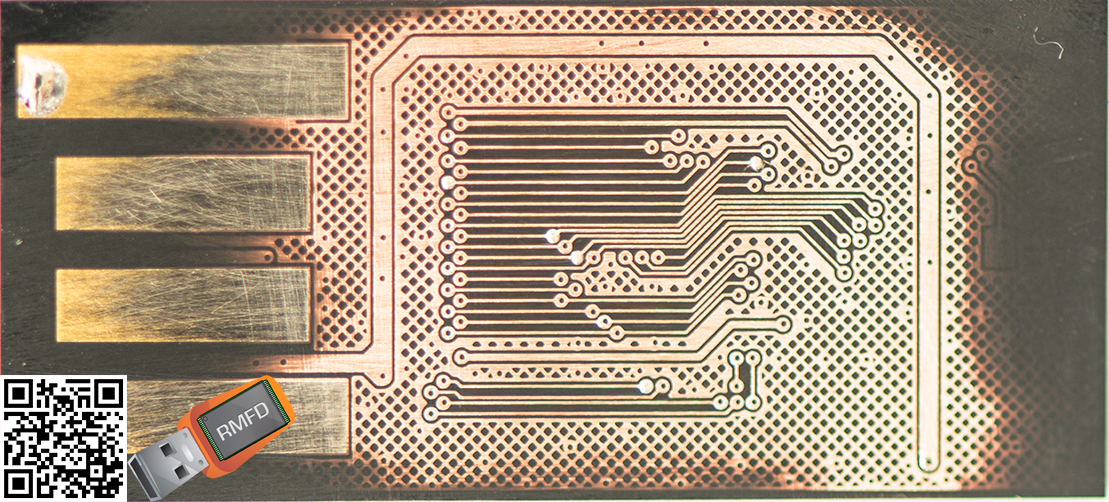
Monolithic flash drive (bottom) — all components fused into a single chip package. No removable parts. Recovery requires direct bond pad access.
How Monolithic Recovery Works

Recovering data from a monolithic device is a multi-step process that can take anywhere from a few days to several weeks depending on the chip variant and the nature of the failure. Here’s what the process looks like:

Step 1: Identification and Imaging
We identify the chip manufacturer, controller type, and NAND configuration. For known variants in our monolithic pinout database, we can often begin extraction the same day. For unknown variants, reverse engineering the pinout can take several days.

Step 2: Bond Pad Access
The protective solder mask or ceramic coating is carefully removed under magnification to expose the internal bond pads. These pads are typically 50-100 microns wide — smaller than a human hair. We connect fine probe wires directly to these pads to establish a data bus, chip enable, and clock lines.

Step 3: Raw NAND Extraction
Once connected, we read the raw contents of the NAND memory. This produces a binary dump — not usable files, but the raw page-level data stored on the flash cells.

Step 4: Data Reconstruction
The raw dump must be descrambled, error-corrected (ECC), and reassembled. Every controller uses its own algorithms for data scrambling (XOR), page mapping, block management, and wear leveling. We reverse-engineer these algorithms and apply them to reconstruct a usable disk image from which your files can be extracted.

Step 5: File Extraction and Verification
The reconstructed image is mounted and files are extracted. We generate a file list for you to verify before you pay.

Real Monolithic Recoveries We’ve Performed

We document monolithic recoveries as we complete them — including cases other labs declined. Recent examples include a Patriot 8GB monolithic drive that came in RAW, where we reverse-engineered the pinout from scratch with a logic analyzer and recovered every file; an undetected SanDisk Cruzer SDDDC3 128GB; and a SanDisk Cruzer Glide 128GB with weak NAND.

For the technically curious, we also share how we quickly diagnose monolithic SanDisk SD cards, a basic monolithic recovery how-to, and our NAND read-retry technique. Browse the full monolithic pinout database or submit a case.

Frequently Asked Questions

Why is monolithic recovery more expensive than traditional flash recovery?

Traditional flash recovery typically involves desoldering a NAND chip and reading it on a standard flash reader — a process that takes hours. Monolithic recovery requires removing protective coatings, reverse-engineering pinouts (if the chip variant is new), making precision connections to bond pads under magnification, extracting raw data, and then descrambling and reconstructing the data using the controller’s proprietary algorithms. This process can take days to weeks and requires specialized equipment that most data recovery labs don’t have.

Can you recover data from a monolithic MicroSD card?

Yes. All MicroSD cards are monolithic by design, and they’re one of the most common monolithic devices we recover. Whether the card is from a phone, drone, GoPro, dashcam, or camera — if the data is still physically present on the NAND cells, we can extract it. Success rates depend on the nature of the failure and the condition of the NAND memory.

What is your success rate on monolithic recovery?

Monolithic recovery is inherently more difficult than traditional chip-off work, so success rates are lower. However, we maintain one of the highest monolithic success rates in the industry because of our proprietary pinout database and years of experience with these devices. If the NAND cells haven’t degraded beyond readability and we can establish a stable connection to the bond pads, recovery is usually successful. We’ll always be upfront about your chances before you commit.

Another company said my device is unrecoverable. Can you still help?

Probably. Many data recovery companies don’t attempt monolithic recovery at all and will tell you it’s unrecoverable simply because they lack the equipment and expertise. We frequently recover data from devices that other labs — including large national firms — have turned away. If the previous lab didn’t attempt bond-pad-level extraction, there’s a strong chance we can help. Submit a case and we’ll give you an honest assessment.

How long does monolithic recovery take?

One to two weeks is typical. If we’ve already developed the pinout for your specific chip variant, the process is faster. If the chip is a variant we haven’t seen before, reverse-engineering the pinout and data reconstruction algorithms adds time. We’ll give you an estimated timeline once we’ve identified the device.

Will my original files and folder names be preserved?

In most successful monolithic recoveries, yes — we can reconstruct the file system and recover files with their original names and folder structure intact. In cases where the file system metadata is severely damaged, we can still recover the raw file data (photos, documents, video) but the original filenames may be lost and files will be sorted by type instead.

Is there anything I should avoid doing before sending my device?

Don’t attempt to open, scrape, or modify the device yourself. Monolithic chips have extremely fragile bond pads that can be permanently damaged by inexperienced handling. Don’t try running data recovery software on a device that isn’t being detected — it won’t help and can sometimes make things worse. Just package the device carefully and send it to us as-is.

Start Your Monolithic Recovery

If your flash drive, SD card, or MicroSD card has failed and other companies have turned you away — or if you suspect your device is monolithic — send it to us. We’ve been doing this longer than almost anyone, and we have the tools and pinout library to give your case the best possible chance.

No data, no charge. You only pay if we successfully recover your files.

Submit a Case Now →

Questions? Email us at info@recovermyflashdrive.com

Testimonials
Excellent
Recover My Flash Drive, LLC5.0
Based on 149 reviews
1 month ago
I highly recommend Jeremy and Recover My Flash Drive, LLC. I was in the process of creating a family recipe book which contained very treasured family recipes including recipes from family members who are no longer with us. During the process the wires on one side of my flash drive became damaged and broke away from the chip. I was very distraught because my family was counting on me to complete this project for them. I had tried a few (3) different businesses in my area and nobody was able to help me out. In fact, by the time I received my flash drive back from them, all the wires had been broken away from the chip and that is basically what I was left with.... a chip. I started looking online and came across Recover My Flash Drive, LLC. I read all their reviews and saw they were able to assist a lot of other people with their issues very successfully. I was hesitant because there is so much out on the internet that is not trustworthy and I couldn't remember exactly what else had been saved on this flash drive. But I bit the bullet and gave it a shot. Afterall, what did I have to lose. And boy am I glad that I did. Their entire process was very smooth and simple. I emailed Recover My Flash Drive, LLC to let them know what my issue was and to see if they would be able to help me out. They responded back almost immediately with a prepaid priority mail shipping label for me to send my flash drive to them. This sounded way too easy. A few days later I received an email and a text from Jeremy advising me what exactly was wrong and how he might be able to fix it. He told me the broken connector was not the failure. He told me the data should be recoverable by doing an off-chip recovery where the flash memory chip is removed, read and the raw data manually reassembled. He then gave me a quote and said that due to the time and labor required it may take about a day or two. There would be no charge if he was unsuccessful. My thought was oh sure, especially given the fact that other places took so long. That sounded like a huge job and there was no way I was gonna hear back from him that quickly. Again, I was proven wrong. He literally got back with me the next day telling me that he was able to recover almost all of my data from the chip. He sent me a link to a listing of the data so that I could verify all the data I needed was indeed recovered. I was literally shocked. I reviewed the data and paid the invoice he sent. He then sent me a link to a secure site to download all of my data. I was so happy because I had been working on this issue for over a year with other businesses and it took Jeremy and Recover My Flash Drive, LLC literally only a couple days. I am so very pleased with my results. Sure, there were some files that were not able to be recovered, but that is totally understandable given the state of the chip when I sent it to him. In fact, he was even able to recover pictures of my granddaughters that I didn't even know were on that chip. What a pleasant surprise that was for me. I totally recommend anyone having flash drive issues to contact Recover My Flash Drive, LLC. In my opinion they are very trustworthy and do what they say they can do and for a very fair and reasonable price. I will be recommending Jeremy and this company to anyone I know who is having flash drive issues. Thank you Jeremy and Recover My Flash Drive, LLC for restoring my trust and for making this experience a very successful and pleasant one. I am so grateful for you.
2 months ago
Quick, easy and secure process. Data was recovered for a reasonable cost.
3 months ago
I cannot recommend this data recovery service highly enough. The entire process was seamless from start to finish. I shipped my flash drive out on a Friday, and it was received by Monday, everything moved quickly and efficiently right from the beginning. Communication throughout the process was outstanding. Jeremy was proactive in reaching out, kept me updated, and was always quick to respond to any questions. That level of transparency made what could have been a very stressful situation feel much more manageable. The turnaround time for the actual data recovery was incredibly fast, and I was especially grateful that there were no additional charges despite my urgent timeline. I am graduating in a month, and this data was critical for my thesis, having that kind of speed and understanding made all the difference. While the data itself might not seem important to everyone, videos of mice in behavioral tasks, it represents over a year of work for my Alzheimer’s research and accounts for about a third of my master’s thesis. Losing it was honestly devastating. Getting it back was an incredible relief, and it quite literally made it possible for me to graduate. Before choosing this service, I had received quotes from other companies that were more than double the price. I also really appreciated that I only needed specific files recovered, which helped keep the cost reasonable. That level of flexibility is something you don’t always find. The combination of clear communication, fair pricing, and exceptional speed truly saved me. I am beyond grateful for the service I received. I see why they have 5 stars because they earned it, if i have data issues again (hopefully not my thesis data) i will be coming back!
4 months ago
Jeremy has been a godsend when it comes to recovery. I had all my precious memories of my daughter's first days on earth that were stuck in a cheap Amazon iPhone to USB drive and it was thanks to him that I found out that it was a counterfeit! Regardless of the deceit by this Amazon seller, he was still able to recover all the files on it and I cannot be more grateful. It was so worth it to go through these folks, and I recommend it to everyone who feels like they've lost precious memories and know that there could be a way to get them back. They genuinely care and do great work here. Turnaround time was super quick of 1-2 days MAX.
4 months ago
Jeremy at Recover My Flash Drive was amazing! He received my drive on a Friday and it was fixed and ready to go the following Monday. There was great communication the whole time and he answered all my questions. The pricing was very fair too compared to other places I looked at. If you have a flash drive that needs repaired I can not recommend them enough!